A transducer can meet design intent on the bench and still create problems in validation if its acoustic output, sensitivity, or beam characteristics drift outside expected limits. That is why ultrasound transducer performance testing matters early in development and even more as a device moves toward design verification, regulatory submission, and production release. For manufacturers, the issue is not just whether the probe works. The issue is whether performance is characterized in a way that supports compliance, risk management, and repeatable product quality.
At a technical level, transducer testing establishes whether the probe delivers the acoustic and functional performance the system claims. That includes output behavior, frequency response, beam profile, sensitivity, image-related performance, and electrical integrity where applicable. In a regulated setting, those data are used to support objective evidence that the device performs as intended and remains within applicable safety and performance limits.
The exact test scope depends on the device type and intended use. A diagnostic imaging probe, a Doppler transducer, and a therapeutic ultrasound applicator do not raise the same questions, even when they share common acoustic principles. A linear array intended for vascular imaging may place greater emphasis on spatial resolution and beam uniformity, while another application may require closer attention to output power or thermal considerations. The test plan should reflect those differences instead of relying on a generic panel.
Why performance testing matters beyond basic functionality
For engineering teams, probe performance data help confirm that design inputs have translated into measurable outputs. For quality and regulatory teams, the same data help demonstrate that product claims are supported, hazards are controlled, and verification activities are tied to recognized methods. These are different objectives, and good testing supports both.
A common mistake is treating transducer evaluation as a narrow acoustic exercise. In practice, the test results often affect several parts of the technical file. If measured output approaches declared limits, labeling and risk documentation may need review. If beam characteristics vary meaningfully across units, manufacturing controls and acceptance criteria may need adjustment. If image quality shifts under environmental or durability stress, the issue may extend into design robustness and shelf-life assumptions.
Performance testing also helps identify whether a problem is located in the transducer itself, in the console, or in the probe-system interface. That distinction matters during failure analysis and design verification. A probe may show degraded sensitivity because of element damage, cable faults, backing material changes, connector issues, or signal processing interactions. A well-structured laboratory assessment can separate those effects.
Core elements of ultrasound transducer performance testing
Most programs begin with acoustic characterization. Depending on the technology and intended use, this may include output parameters such as acoustic power, pressure measurements, temporal and spatial characteristics, center frequency, bandwidth, and beam dimensions. These measurements are not interchangeable. Each one answers a different question about how the transducer is transmitting energy and whether that energy profile matches design expectations and applicable limits.
Image-related performance is often just as important. Resolution, depth of penetration, uniformity, geometric accuracy, and contrast-related behavior can reveal issues that pure output measurements do not. A probe may produce acceptable acoustic power while still underperforming in image quality because of array defects, element inconsistency, or system coupling effects. For that reason, acoustic and imaging evaluations are usually more useful together than in isolation.
Electrical and mechanical factors also deserve attention. Cable flexing, connector reliability, insulation integrity, and housing durability can affect transducer output over time. In some cases, the transducer passes initial acoustic testing but fails after handling, cleaning simulation, environmental conditioning, or repeated use cycles. When the intended use involves reprocessing, transport, or demanding clinical handling, those conditions should be represented in the verification strategy.
Standards alignment and regulatory relevance
For medical device manufacturers, test data have limited value if the methods and documentation are not aligned with recognized standards and regulatory expectations. The relevant framework depends on the device category, claims, and submission pathway, but in general the goal is clear: performance testing should be traceable to established methods, performed under a controlled quality system, and documented in a form that supports review.
That is especially important when output and safety characteristics intersect. Acoustic exposure parameters, electrical safety considerations, and essential performance claims are not separate regulatory conversations. They influence one another. If a transducer is part of a larger ultrasound system, the manufacturer must consider the extent to which testing should be performed at the probe level, the system level, or both. The right answer depends on how much the console architecture, software, and application mode affect the final output delivered to the patient.
Accredited laboratory testing can reduce uncertainty here because it provides formal control over methods, equipment calibration, and reporting practices. For teams preparing submissions or design history documentation, that level of rigor can make the difference between data that are technically informative and data that are submission-ready.
When to test during development and commercialization
The timing of ultrasound transducer performance testing affects how useful the results will be. Early feasibility testing can identify major design issues before the team commits to tooling or verification protocols. At that stage, the objective is often comparative rather than final. Engineers may want to understand how material choices, matching layers, backing structures, or array geometry affect output and imaging behavior.
Later in development, verification testing becomes more formal. Acceptance criteria should be linked to design inputs, risk controls, and product claims. If performance margins are narrow, a single end-stage test campaign may be too late. Intermediate checkpoints are usually more efficient, particularly for probes with complex arrays or demanding clinical applications.
Production and post-design-change testing are equally important. A transducer design that performs well in prototype form may shift once manufacturing scales, suppliers change, or assembly steps are refined. Even small changes in materials, bonding, cable construction, or connector configuration can influence acoustic performance. Testing after change control is not just a formality. It is how manufacturers confirm continued equivalence and protect against unintended regression.
Common failure modes and what the data may indicate
The value of performance testing increases when the results are interpreted in context. A drop in sensitivity may suggest element degradation, poor interconnect integrity, or depoling effects. Frequency shifts can point to material variation or structural change within the stack. Beam distortion may indicate array nonuniformity, delamination, or failures in channel control. Image artifacts may reflect dead elements, intermittent wiring, or system-level processing issues rather than a simple output deficiency.
It also matters whether the issue is isolated or systematic. One failed unit may indicate handling damage or assembly error. A broad trend across lots suggests a process issue, supplier variation, or an acceptance window that does not adequately control critical characteristics. Testing should therefore support both product qualification and process understanding.
There are trade-offs in how tightly performance is specified. Very narrow limits may improve consistency but can increase rejection rates and manufacturing burden. Wider tolerances may ease production but create more variability in clinical performance or more difficult justification during review. The right balance depends on intended use, risk profile, and how strongly the transducer performance supports labeled claims.
Choosing a laboratory approach that supports submission quality
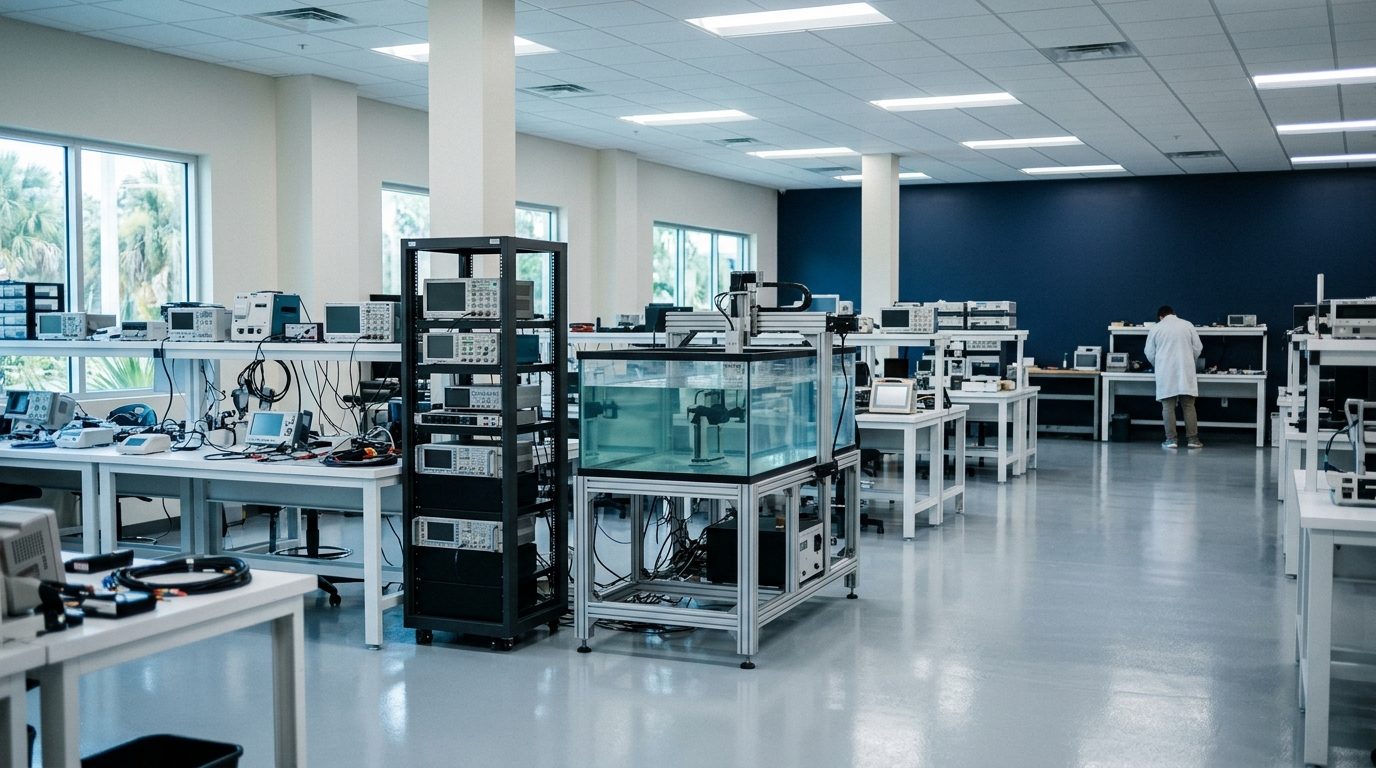
Manufacturers typically need more than raw measurements. They need a test strategy, traceable methods, calibrated instrumentation, and reporting that fits design control and regulatory documentation. That is why laboratory selection should focus on technical scope and accreditation status, not just turnaround time.
A capable testing partner should understand the distinction between exploratory engineering work and formal compliance testing. Both are useful, but they serve different purposes. In a formal setting, the protocol should define the unit configuration, test conditions, acceptance criteria, applicable standards basis, and treatment of deviations or anomalies. Reports should be written clearly enough for engineering review and structured tightly enough for quality and regulatory use.
For organizations managing submission timelines, responsiveness still matters. A technically sound lab that can align methods quickly and issue defensible documentation on schedule has practical value. Sigma Scientific Services operates in that space, supporting manufacturers that need standards-based medical device testing with the level of control expected in regulated programs.
Building a stronger verification package
The strongest ultrasound transducer performance testing programs do not treat the probe as an isolated component. They connect transducer behavior to system function, intended use, and documented risk controls. They also account for the fact that performance is not static. It can change with manufacturing variation, environmental stress, repeated use, transport, and design change.
When testing is planned with those realities in mind, the resulting data do more than confirm a specification. They help manufacturers defend product claims, tighten process controls, and move into review with fewer unanswered questions. That is usually the difference between a test report that sits in a file and one that actively supports commercialization.
More insights
Consult with a medical device test expert
Tell us about your device and the standards you need. You’ll have a quote within 24 hours.
(305) 239-4441 info@sigmascientific.us 490 Sawgrass Corporate Parkway, Suite 130, Sunrise, FL 33325